

What is the safest way to get out of bed with back pain?
The safest approach is to avoid sitting straight up or twisting sharply. Instead, roll onto your side, move your legs toward the edge of the bed, and use your arms to help push your upper body upright.
This method keeps the spine more aligned and reduces the sudden strain that can occur when the abdominal and back muscles are forced to lift the torso all at once.
Step-by-step technique
1. Pause before moving. Take a few slow breaths and notice whether the pain is mild stiffness, a sharp catch, or pain traveling into a leg.
2. Bend your knees slightly. This can make rolling easier and reduce tension through the lower back.
3. Roll onto your side as one unit. Try to move your shoulders, hips, and knees together rather than twisting your waist.
4. Slide your legs over the edge of the bed.
5. Push up with your arms. Use your hands or forearm to help lift your chest while your legs move toward the floor.
6. Sit briefly before standing. Keep both feet supported and wait for dizziness, weakness, or a sudden pain surge to pass.
7. Stand using your legs. Lean forward slightly from the hips, keep your back relatively neutral, and push through your feet.
The movement may feel slower than sitting straight up, but slower is usually safer when the back is painful.
Why does back pain feel worse first thing in the morning?
Morning pain may reflect stiffness after several hours in one position, irritated muscles, joint sensitivity, or a sleeping position that places extra stress on the lower back. A mattress, pillow arrangement, or prolonged stomach sleeping can also influence how the back feels when movement resumes.
Cold weather can make morning stiffness more noticeable for some people. In Albany, winter temperatures, icy walking surfaces, and time spent clearing snow may also contribute to muscle tension or a recent strain. A painful back after shoveling, lifting, slipping, or carrying heavy items should be treated more cautiously than ordinary stiffness.
Morning pain does not automatically mean the spine is damaged. However, pain that is severe, repeatedly worsening, or accompanied by other symptoms deserves medical evaluation. Most uncomplicated acute low back pain improves over days to several weeks, often sooner. ([medlineplus.gov](https://www.medlineplus.gov/ency/article/007425.htm?utm_source=openai))
What should you do immediately after standing?
Once upright, avoid rushing into a deep stretch. Take a few short steps around the room and let the back gradually adjust to being vertical.
Helpful first movements may include:
- Gentle walking for a few minutes
- Slowly shifting weight from one foot to the other
- Bending and straightening the knees without forcing the back
- Taking a warm shower if heat usually reduces muscle tightness
- Using a cold pack briefly if the pain began after a recent strain or swelling
Do not force a stretch that causes sharp pain, numbness, tingling, or pain that travels farther down the leg. A comfortable stretch should feel mild and controlled, not like a test of how far the body can be pushed.
Extended bed rest is generally not helpful for ordinary back pain. Staying in bed for more than a day or two may increase stiffness and make returning to normal activity more difficult. Light movement within tolerable limits is usually preferable. ([medlineplus.gov](https://medlineplus.gov/backpain.html?utm_source=openai))
Should you bend forward or arch your back?
Neither position is universally correct. The best position is the one that reduces symptoms without causing a sharp increase in pain.
For many people, the transition from lying to standing is easier when the back remains in a comfortable, neutral position. This does not mean holding the spine rigid. It means avoiding a sudden, forceful bend or twist while the muscles are still cold and stiff.
Try to avoid:
- Quickly sitting straight up from flat on the back
- Twisting while reaching for a phone or bedside item
- Bending from the waist to pick up clothing
- Lifting a child, pet, laundry basket, or snow shovel immediately after standing
- Testing the painful motion repeatedly
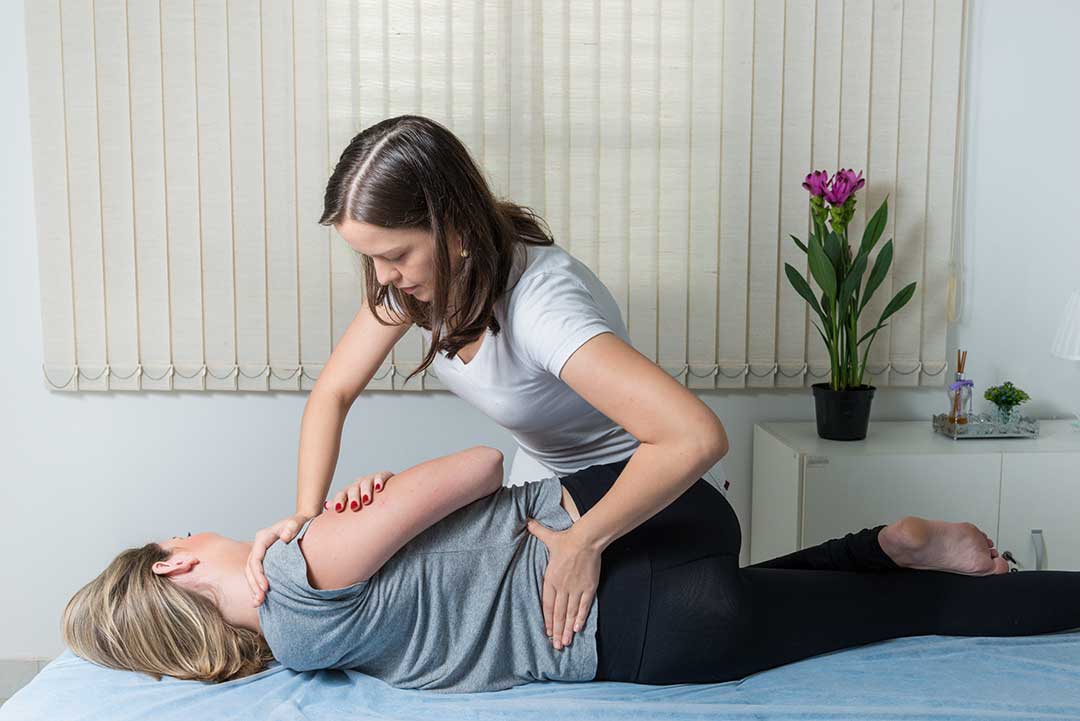
If one movement consistently produces leg pain, numbness, or weakness, stop that movement rather than repeatedly trying to “work through” it.
How can the bed and bedroom setup help?
A practical setup can make the first few minutes easier.
Keep frequently used items within easy reach so there is no need to twist or stretch suddenly. A stable chair or firm surface near the bed may provide support while standing, but avoid pulling hard on unstable furniture. Clear loose rugs, clutter, and slippery areas around the bed, especially during icy seasons when wet footwear or tracked-in snow can create additional fall hazards.
Sleeping position is also worth considering:
- Side sleepers may feel better with a pillow between the knees.
- Back sleepers may prefer a pillow under the knees.
- Stomach sleeping can increase low-back extension for some people, though comfort and symptoms vary.
- A pillow that keeps the neck excessively bent may add to overall morning discomfort.
These adjustments are not a cure, but they may reduce repeated strain during the night.
When is morning back pain a warning sign?
Seek urgent medical care for back pain with new loss of bladder or bowel control, numbness around the groin or buttocks, significant leg weakness, inability to walk normally, or rapidly worsening symptoms. These can indicate a problem requiring prompt assessment. ([medlineplus.gov](https://www.medlineplus.gov/ency/article/007425.htm?utm_source=openai))
Medical evaluation is also appropriate when back pain follows a serious fall, collision, or other major injury; occurs with fever, unexplained weight loss, a history of cancer, or blood or burning with urination; or repeatedly wakes a person at night. Severe pain that does not allow any comfortable position should not be managed only with home exercises. ([medlineplus.gov](https://www.medlineplus.gov/ency/article/007425.htm?utm_source=openai))
Call emergency services for signs of a possible spinal injury, such as a major accident followed by loss of movement or sensation. Chest pressure, trouble breathing, fainting, or pain spreading into the back can also signal an emergency unrelated to a typical muscle strain. ([medlineplus.gov](https://www.medlineplus.gov/ency/patientinstructions/000593.htm?utm_source=openai))
When should ordinary back pain be checked?
If the pain is mild and gradually improving, gentle activity and careful transitions may be reasonable. If it is severe, does not begin improving after several days, keeps returning, or lasts longer than several weeks, arrange an appropriate medical assessment.
A clinician may ask when the pain began, whether there was lifting or a fall, whether symptoms travel into the leg, and whether numbness or weakness is present. That information helps distinguish common mechanical pain from conditions that need a different type of care. ([medlineplus.gov](https://www.medlineplus.gov/ency/article/007494.htm?utm_source=openai))
The main goal is not to perform a perfect maneuver. It is to reduce sudden loading, avoid unnecessary twisting, and pay attention to symptoms that suggest the problem is more than routine morning stiffness.
